We don’t usually talk about flops in television. Unsuccessful movies can achieve a perverse kind of immortality (Ishtar! Gigli!), but their boob tube equivalents are soon forgotten. During the first several decades of TV and film’s coexistence as media, this has been due to a vast difference in the stakes involved. In days of yore, if a projected blockbuster with a star-studded cast and huge budget fell on its face, that failure would inspire withering takedowns from the Siskel & Ebert critical class and months (if not years) of snide jokes on late night talk shows. Meanwhile over in TV Land, if a new show failed to find an audience the network would simply pull the plug and air reruns of a more successful program in its place. Such developments would barely make news in the industry trades, let alone in the public consciousness, because television was considered mere popular entertainment and thus not capital-I Important.
This can be difficult to remember now that the concept of Prestige Television is almost 30 years old, but for a very long time the notion that television could produce anything worthy of serious critical acclaim, or should be academically assessed beyond a broad McLuhanite study of mass media, was laughable. Television was seen as a disposable artform with a low ceiling for quality, and very few people argued otherwise. In contrast to film critics, TV critics were seen less as serious cultural thinkers and more like providers of viewers’ guides. Granted, there were a few TV bombs that lived on in infamy, but these were exceptions that proved the rule, usually shows with crackpot premises so bizarre they begged the question of how they were greenlit in the first place. The classic example of this is Cop Rock, the infamous 1990 Stephen Bochco crime procedural/musical whose brief existence still puzzles people. For the most part, though, a show that was mercifully cancelled after weeks of terrible ratings would go unmourned, not even remembered as a source of mockery.
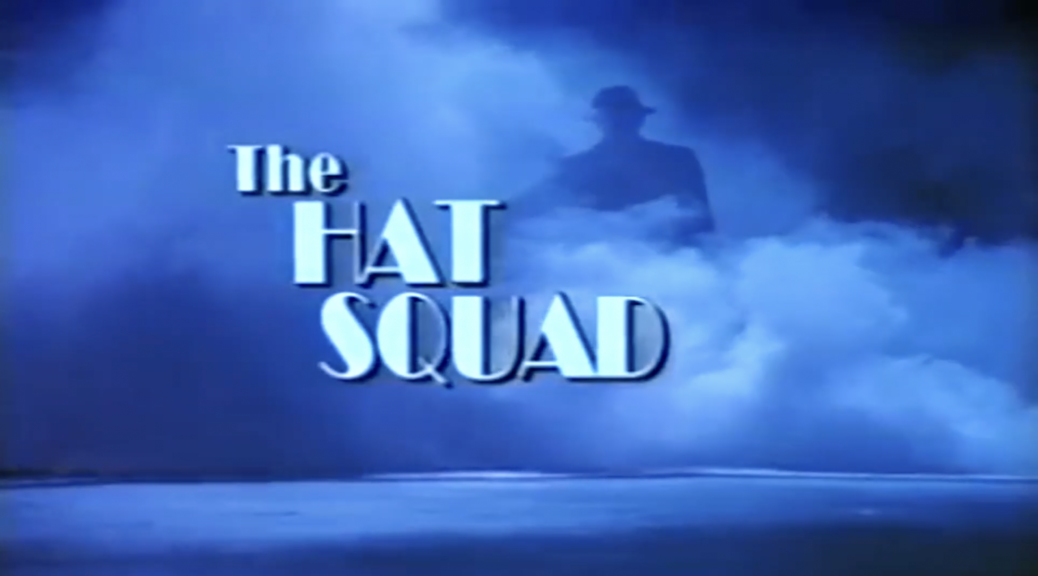
Or at least these shows wouldn’t be remembered by anyone normal. As a non-normal person, I was recently reminded of The Hat Squad, a cop procedural that debuted on CBS in 1992 and ran for 11 episodes before dying the lonely death fated for television’s failures. When I saw the opening credits for this show in a collection of TV intros from that season, I felt my Failed Show Spidey Sense tingling. The premise of The Hat Squad, as expressed during those credits, almost had me falling out of my chair with laughter: a foster dad tells his squabbling orphan charges that they have to grow up to be like the famed Hat Squad of police legend, “who wore hats and dusters as a symbol of that difference and no criminal would mess with them.”
I have memories of this show being mocked upon its release, though these memories are vague in the extreme. I can’t recall a specific person or outlet razzing The Hat Squad, only a general vibe of mockery that accompanied its brief lifespan. Jesse Hawken of Junk Filter suggested to me that David Letterman ragged on the show without mercy when it debuted. I was an avid Letterman watcher back then, so if he did set his sights on The Hat Squad that would explain why its poor reception rang a bell to me, however ephemerally. What I do know for sure is that The Hat Squad is the platonic ideal of something that David Letterman would love to make fun of, a perfect mixture of unearned self-importance, neo-fascist manichean worldview, and platinum-grade stupidity.
An anecdote to demonstrate just how dumb The Hat Squad is: When I showed the opening credits to my college-aged kid, she stood agape for a few moments before asking me, in all earnestness, “Was this show made for adults?” Having watched the entirety of the show’s brief run, I can confidently say: no, it was not.
As an amateur researcher in Terrible TV, I’ve found that a mediocre theme song is often an indication of a show’s lack of quality. Not every failed series has a bad theme song, but the percentage of failed shows with bad theme songs is very high. The Hat Squad should be able clear this bar, as its theme was composed by the GOAT Mike Post. If you’ve ever had a theme song stuck in your head, there’s a very good chance Mike Post wrote it, and some of his most iconic work was done for other cop/detective shows (The Rockford Files, Magnum P.I., Hill Street Blues, Law & Order). As you can hear from the above video, though, The Hat Squad theme is not one of his better efforts. It sounds like it was pulled from a library collection called Music For Watching Steam Escape From A Manhole, or the soundtrack for an erotic thriller where no one gets to first base. Coming from a man who could write an ear worm theme song in his sleep, The Hat Squad is shockingly indistinct. I theorize that Post saw this show was a turkey from the jump and decided there was no point in throwing pearls before swine.
The Hat Squad are an elite trio of detectives who grew up together as foster brothers. They all have origin stories kited from Bruce Wayne, their hatred of bad guys borne of the youthful trauma of witnessing loved ones get gunned down by low-life scum. After being orphaned by Crime, the three boys are adopted by super cop Mike Ragland (James Tolkan, character actor famed for playing bald hardasses like the principal in Back to the Future). In adulthood they are Ragland’s personal army, investigating crimes while dressing like 40s gumshoes filtered through Z Cavaricci, with a touch of Dick Tracy thrown in. Why they do this is never adequately explained beyond the opening credits implying it is an homage to the original Hat Squad, though we learn nothing about that original Hat Squad or why they deserve such a tribute.1 All the viewer needs to know is that these outfits look incredibly conspicuous (a major negative for cops who frequently work undercover) and incredibly stupid.
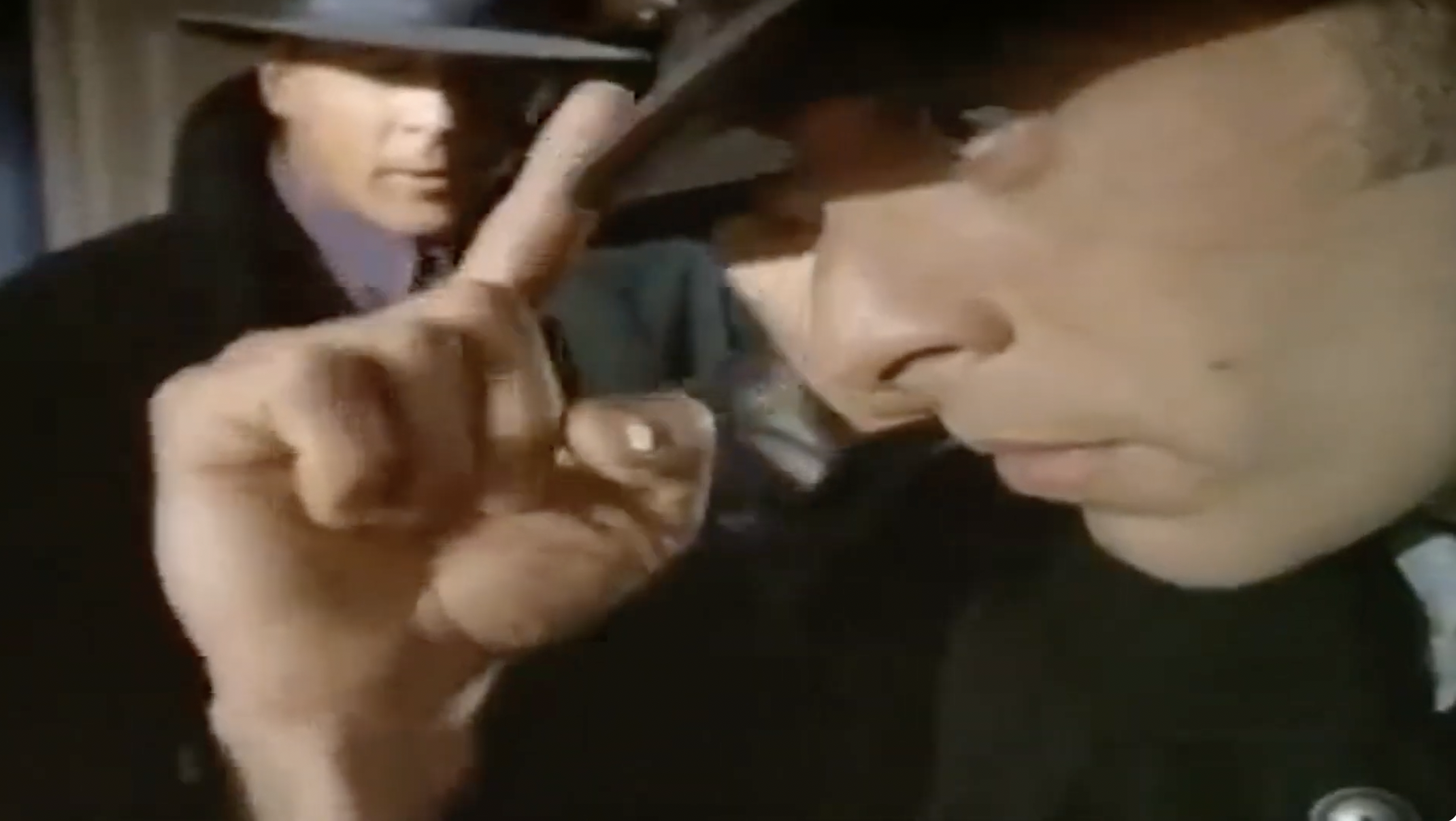
The squad operates out of an office with lots of exposed brick, celestial sunlight pouring through arched windows, and odd touches of blue and purple neon. It resembles the deconsecrated church HQ from 21 Jump Street (another show created by the man responsible for The Hat Squad, prolific producer/writer Stephen J. Cannell) crossed with a NY Deli potato chip bag. The squad’s de facto leader is Buddy (Don Michael Paul), who laments he does not remember his murdered parents at all. The youngest brother Matty (Billy Warlock, early 90s heartthrob seen on Days of Our Lives and Baywatch) is studying law when not busting bad guys, and his effortless charm and humility make him a walking chick magnet. Then there’s the Puerto Rican brother Rafael (Nestor Serrano). I’m only mentioning his ethnicity because he himself mentions it every two seconds. His self image as a Latin lothario is constantly punctured by the fact that every woman on earth finds him repulsive. The Hat Squad subjects Rafael to a gargantuan level of humiliation for the sake of comic relief, which is troubling because he is the show’s only adult character who is a person of color and also not a criminal. Rafael witnessed his parents being mowed down by guns and, in another nod to Batman, has vowed to never use one. This requires him to get very creative about how he takes down bad guys. And by creative, I of course mean stupid.
The Hat Squad operates with the strict black-and-white viewpoint common in post-Dirty Harry police procedurals. All non-cops in their world are either wide-eyed innocents or ontologically evil, and whatever must be done to protect the former from the latter is perfectly okay, like in the show’s pilot episode when the Hat Squad threatens a thug with a trip down an empty elevator shaft until he gives up the name of a new villain in town. That villain is Victory Smith (there are some Hall of Fame level dumb names on this show), who looks like a live action Duke Nukem or a roided up Mark McGrath. Smith weaves a path of destruction through the downtown LA section of Vancouver, demonstrating to the viewer that he belongs to the special criminal class that only existed in movies & TV from the 1980s: bad guys who aren’t into evildoing for profit, only for the love of doing crimes. Along the way he terrorizes a mother and her son and steals the kid’s prize possession, a Whitey Ford card given to him by his dead father, which is a thing a kid in the early 1990s would definitely have and be super into. It’s 1992, kid; why not get a Ken Griffey Jr. Score card? Randy Johnson? Cecil Fielder maybe?
A recurring feature of the show is an almost supernaturally powerful bad guy who menaces a child, traumatizing them much like The Hat Squad members were when they were kids. This allows our heroes to swoop in and assure the frightened child they’ll catch those evildoers and make everything better. It’s a “save the cat” plot device one could label fascistic if it wasn’t so nakedly infantile.
The Hat Squad promises revenge against Victory Smith and a swift return of the prized Whitey Ford card. Their first attempt to do so goes awry when Rafael, posing as a drug dealer wanting to parlay with Smith, is sniffed out as a cop almost immediately by the villain, who also brings a hostage with him to the meet, probably to save the time and hassle of grabbing one later; smart thinking! Rafael’s foolproof plan to defend himself using a razor-sharp playing card (because, remember, he refuses to carry a piece) is foiled when the card is blown away by a gust of wind—a contingency you really should plan for if your weapon of choice is lighter than air. But lo, he has some sort of blackjack type weapon tucked into his hatband, and this allows him to whack Smith and beat a hasty retreat. This meetup is done in a city park in broad daylight, so when Smith and his henchmen (yes he has henchmen, no it’s not clear what they do for him) start spraying lead at The Hat Squad, it puts tons of innocent children in harm’s way, an outcome diametrically opposed to the squad’s whole Protect The Innocent ethos. While pursued by The Hat Squad, Smith falls down a steep cliff yet not only survives but is still in good enough shape to carjack a jeep and continue his crime spree.
Then we take a break for a bit of exposition and background. The Hat Squad boys gather at the orphan house where they grew up to celebrate Buddy’s birthday, gift him a refurbished muscle car with vanity plate THE BEAST (“THE” set at an odd angle for no reason), and remember their lamented parents—or in Buddy’s case, remember not remembering them. Cue an extended flashback about the boys’ childhood trauma set to Queensryche’s “Silent Lucidity” and filmed in the same manner as a music video from this era, with family portraits crashing to the floor and children sitting bolt upright in bed because of nightmares.
This montage was intended to be poignant I’m sure, but I could not stop laughing during the entire segment. If you’re younger than me and all of the above reads like gibberish, all you need to know is that Queensryche made an album called Operation: Mindcrime, one of the most hilarious titled musical works in history, and that they were one of the Metal Lite groups that Nirvana mercy-killed with the release of Nevermind. And if you are old enough to remember Operation: Mindcrime, let this be a reminder to schedule your screening for colon cancer.
After “Silent Lucidity,” the boys sit down at the dinner table, where they are reminded not to speak business during a family meal by their stern foster mom, who comes across like Margaret Thatcher if she was lace curtain Irish. Then they all blow off some steam by bungee jumping off a local bridge, which the viewer should recognize as a Chekhov’s gun for some mind-numbingly stupid action to come.
A few more attempts to capture Victory Smith fall to pieces, including a wild goose chase in which the Hat Squad are led to a bank where it seems like the bad guy has planted a bomb and Rafael takes it upon himself to defuse it. Why wait for the bomb squad when you have The Hat Squad? But not to worry, the “bomb” is in reality a taunting jack in the box, a clever ruse that their nemesis seems way too dumb to have set up. Then again, “dumb” is a relative term in the universe of The Hat Squad, where everything and everyone is at least a little bit dense.
Running out of ideas, the boys realize that to catch A Stupid you gotta think like A Stupid. Relistening to an intercepted phone call from the villain, they hear Smith headbanging to a local hard rock radio station. They also know he stole a bunch of tapes from a metal band called Dead Reckoning during his reckless downtown crime spree. In the sort of gambit that only works on TV, they lean on his favorite radio station to air a false announcement that Dead Reckoning is making a local live appearance. Victory Smith and his crew of biker thugs hear this fake news on the radio and react like 6-year-olds pumped to meet Pikachu at the mall.
When the bad guys show up at the supposed band appearance, though, they quickly sniff out a set up. The henchmen are caught but Victory Smith himself escapes on a motorcycle stowed on the back of his pickup, a convenient thing to have to beat the infamous LA traffic. Rafael chases after him on a commandeered bike of his own but once again eschews firearms for another bespoke weapon: he will bungee jump the perp into submission, while the viewer is forced to listen to another dreadful butt-rock song, “Laying Down the Law.”
All fiction requires suspension of disbelief, some more than others, and this one involves a boatload. Personally, I am willing to suspend my disbelief about how this move could possibly work logistically, how Rafael could time his jump to the bad guy’s progress on a very fast motorcycle, or how he could clothesline Victory Smith in this fashion without also putting himself in the hospital. I am willing to do all this because it is one of the dumbest things I’ve ever seen in a work that is meant to be serious, and it made me laugh enough to dwarf the guffaws I let out during the “Silent Lucidity” interlude. So thank you, The Hat Squad, for one of the most entertaining TV moments I’ve seen in years.
Upon its debut The Hat Squad was almost universally panned by critics. The only remotely positive contemporary review I could find was from a Calgary newspaper that praised the fact that it was filmed in Canada. (An odd take considering that by 1992 it was already very common for US-based shows to be filmed north of the border. In any event, I do not blame Canada for this mess.) A few takes criticized its reactionary obsession with protecting blameless children from irredeemable villains, like one assessment in the Baltimore Sun that worried about “a series that appeals to viewers’ worst instincts [with] a completely crackpot mixed message of fascism and family values.” But most critics were too busy laughing to take its jury-by-cop attitudes too seriously, and the bungee jump takedown was cited as a new low in the annals of TV stupidity. The Chicago Tribune called it “a crime against television,” Knight-Ridder said it “redefines nonsense,” and Scripps charged the show “goes way past dumb.”
After viewing the pilot, I challenged myself to watch The Hat Squad‘s entire run of 11 episodes, just to see if the show grew or changed at all, or if there were any more hilarious climaxes like the bungee jump beatdown. What I found instead was a show that lost confidence in itself rather quickly. We’ve all had the experience of working someplace where our bosses launched a new initiative to great fanfare, only for these changes to be recognized as pointless and for all the new procedures to be quietly dropped and never spoken of again. I got the impression that this is what happened to The Hat Squad: all of the hoops the show required itself to jump through were set on the ground one by one, until it was transformed from an astoundingly stupid cop show into a boring replacement level stupid cop show.
Early episodes lean on the squad’s orphan backstories and show Ragland and his wife taking in additional youngsters who’ve been orphaned by Crime, including a boy who becomes involved in their police work to an upsetting degree. Before long, though, both the Cop Orphan House and the street crime Scrappy-Doo are abandoned as plot devices. This, and the fact that several episodes have nearly identical “protecting a witness from the mob” plots, convinced me that the writers took the Mike Post route and decided this show wasn’t worth much creative energy. Rafael’s refusal to use firearms plays a big role in early episodes, but eventually this plot device is virtually forgotten; he never explicitly abandons his principles, but after a certain point the show just doesn’t bother to make his gun avoidance A Thing anymore. And while the show has an odd preoccupation with aerial assaults—several episodes end with The Hat Squad rappelling onto the bad guys from the ceiling, and one features them mountain climbing into the bad guys’ hideout—there was nothing to approach the idiotic majesty of the bungee assault in the pilot.
In saying all of the above, I am saying more than anyone has said about The Hat Squad in almost 35 years. Mocking the show now seems almost cruel, exhuming a corpse just to laugh at it for being dead. All I can say in my defense is that if the bungee jump takedown aired today we would never stop talking about it, or sharing it online, or using images of it to punctuate our reactions to other stupid things. In short, The Hat Squad can thank its lucky stars that it died the quiet death of failed shows in the pre-internet era, long before the invention of The Meme.
And what of David Letterman? Sadly, I was unable to verify a direct Dave-Hat Squad connection. The closest I came was a Chicago Tribune article from 1992 about the resolution of a dispute between CBS and its affiliates. After the network had announced a plan to cut the fees they paid to local channels to air its programming, the two parties came to an agreement that would prevent what the Tribune described as a potential “affiliate revolt” over the lost revenue. A CBS executive wouldn’t comment on the network’s efforts to woo Letterman away from NBC (as would come to pass, though the move was nowhere near official yet), but predicted affiliates would be “very excited” if that happened, as such a move would further line everyone’s pockets.
In the meantime, CBS placated its affiliates with other forms of compensation, including extra local advertising time allocated during some of its newer shows—including The Hat Squad. I sure hope the local channels got to renegotiate.
- There was evidently a real Hat Squad in the LAPD of the 1950s, famed for wearing wide brim hats during the pork pie era and for also being gigantic dudes who intimidated criminals through their sheer size and brutality. A TV show intended to celebrate the memory of a bunch of thugs with badges would be worrisome if it had any quality at all. Luckily, The Hat Squad does not. ↩︎