We don’t usually talk about flops in television. Unsuccessful movies can achieve a perverse kind of immortality (Ishtar! Gigli!), but their boob tube equivalents are soon forgotten. During the first several decades of TV and film’s coexistence as media, this has been due to a vast difference in the stakes involved. In days of yore, if a projected blockbuster with a star-studded cast and huge budget fell on its face, that failure would inspire withering takedowns from the Siskel & Ebert critical class and months (if not years) of snide jokes on late night talk shows. Meanwhile over in TV Land, if a new show failed to find an audience the network would simply pull the plug and air reruns of a more successful program in its place. Such developments would barely make news in the industry trades, let alone in the public consciousness, because television was considered mere popular entertainment and thus not capital-I Important.
This can be difficult to remember now that the concept of Prestige Television is almost 30 years old, but for a very long time the notion that television could produce anything worthy of serious critical acclaim, or should be academically assessed beyond a broad McLuhanite study of mass media, was laughable. Television was seen as a disposable artform with a low ceiling for quality, and very few people argued otherwise. In contrast to film critics, TV critics were seen less as serious cultural thinkers and more like providers of viewers’ guides. Granted, there were a few TV bombs that lived on in infamy, but these were exceptions that proved the rule, usually shows with crackpot premises so bizarre they begged the question of how they were greenlit in the first place. The classic example of this is Cop Rock, the infamous 1990 Stephen Bochco crime procedural/musical whose brief existence still puzzles people. For the most part, though, a show that was mercifully cancelled after weeks of terrible ratings would go unmourned, not even remembered as a source of mockery.
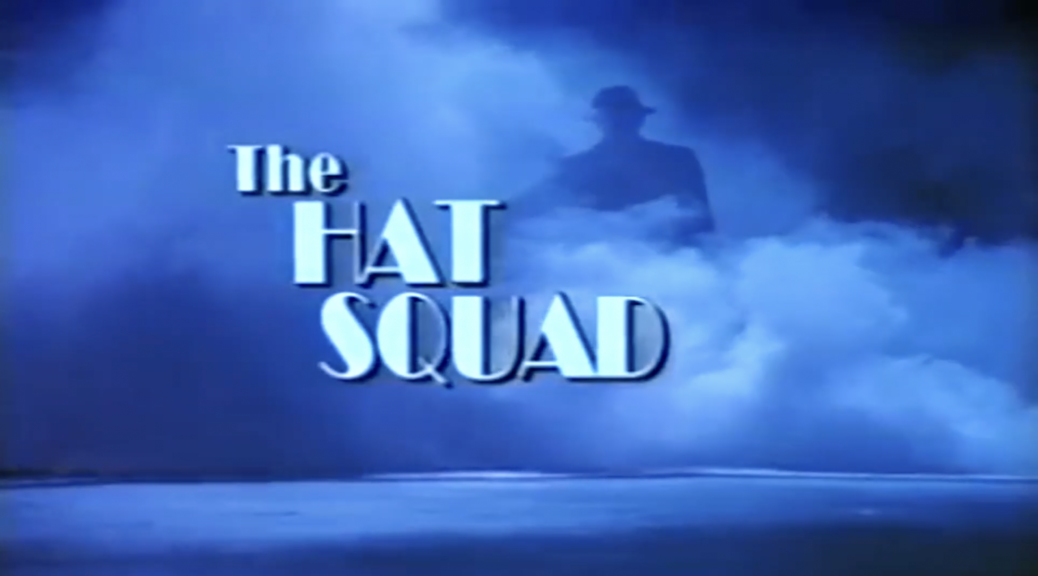
Or at least these shows wouldn’t be remembered by anyone normal. As a non-normal person, I was recently reminded of The Hat Squad, a cop procedural that debuted on CBS in 1992 and ran for 11 episodes before dying the lonely death fated for television’s failures. When I saw the opening credits for this show in a collection of TV intros from that season, I felt my Failed Show Spidey Sense tingling. The premise of The Hat Squad, as expressed during those credits, almost had me falling out of my chair with laughter: a foster dad tells his squabbling orphan charges that they have to grow up to be like the famed Hat Squad of police legend, “who wore hats and dusters as a symbol of that difference and no criminal would mess with them.”
I have memories of this show being mocked upon its release, though these memories are vague in the extreme. I can’t recall a specific person or outlet razzing The Hat Squad, only a general vibe of mockery that accompanied its brief lifespan. Jesse Hawken of Junk Filter suggested to me that David Letterman ragged on the show without mercy when it debuted. I was an avid Letterman watcher back then, so if he did set his sights on The Hat Squad that would explain why its poor reception rang a bell to me, however ephemerally. What I do know for sure is that The Hat Squad is the platonic ideal of something that David Letterman would love to make fun of, a perfect mixture of unearned self-importance, neo-fascist manichean worldview, and platinum-grade stupidity.
An anecdote to demonstrate just how dumb The Hat Squad is: When I showed the opening credits to my college-aged kid, she stood agape for a few moments before asking me, in all earnestness, “Was this show made for adults?” Having watched the entirety of the show’s brief run, I can confidently say: no, it was not.
Continue reading The Hat Squad