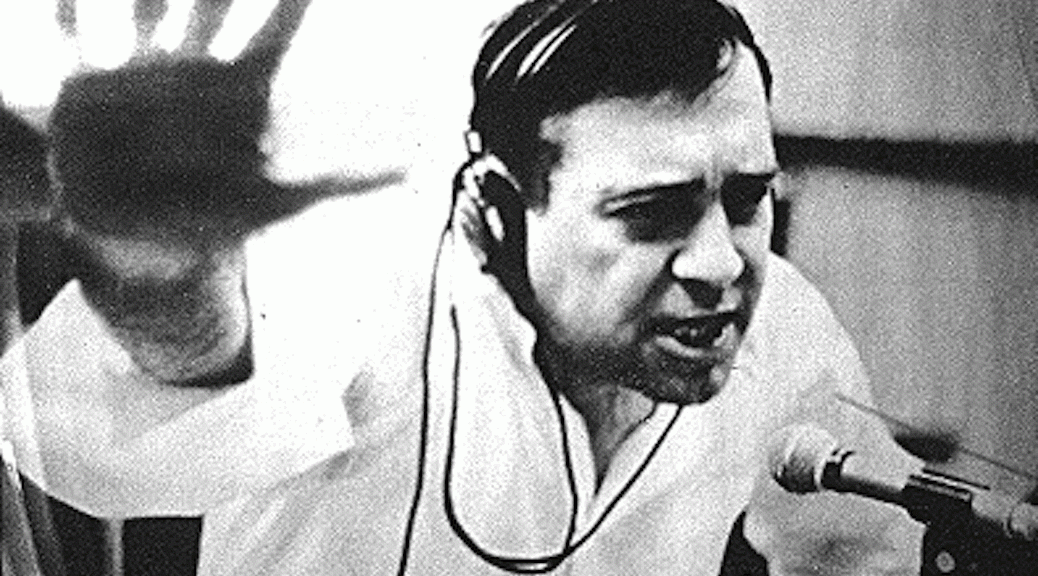
A Few Minutes with 120 Minutes, 1991

Recently rediscovered within the Vast and Dusty Scratchbomb VHS Archives: A nearly complete episode of 120 Minutes, MTV’s “alternative music” program. This aired December 15, 1991, and provides some insight into what exactly constituted alternative music (at least as far as MTV was concerned) during the waning days of the First Bush administration.

I’ve chopped this up into three pieces to ease playback and preserve some of the flow of the original. The first half hour of the show is missing from my tape, so we pick it up with host Dave Kendall introducing a clip from a live Cure pay-per-view special. I remember more than one friend ordering that special and borrowing the tape from them, then trying to figure out a way to copy it. Never cracked the code before I had to return it.

Though this apisode aired and was presumably taped after Nirvana “broke,” you’ll notice very little Seattle stuff here. Grunge would soon dominate the 120 Minutes playlist, but during this particular episode the videos leaned heavily toward industrial (Ministry, Nitzer Ebb), British shoegaze, and indie rock like Urge Overkill.

If you watched that first video, you heard Mr. Kendall tease a mini-documentary on The Clash, and here it is, narrated by Kurt Loder. There’s some amazing live footage here that I’ve never seen anywhere else, from the band’s early days, their 1982 concert at Shea Stadium, and lots of stuff in between. Also, some interesting testimonials from Joe Strummer, Mick Jones, and Paul Simonon.

And here’s the last half hour of the episode, which contains some curious Christmas music from Hoodoo Gurus and The Wedding Present. Stick around past the end credits to catch an episode of the weird animated omnibus Liquid Television. This show does not seem quite as mind blowing to me as it did back when I was in junior high, but then what does, really?

Finally, if you’re one of those weirdos like me who enjoys watching old commercials, here’s a playlist with ads that aired during this episode, plus a few spots from 1992 I found on the same tape. Highlights include:

  • Promo for MTV’s Best of 1991 programming featuring Cindy Crawford and background music of “Smells Like Teen Spirit,” which is as much 1991 as is legally allowed by law.
  • In the same dated vein, a promo for an issue of People Magazine that promises the lowdown on all the dirt from the set of Hook.
  • Casio Rapmaster keyboard, which looks and sounds exactly like what you think it does.
  • An unsettling Christmas-themed commercial for Playboy.
  • The now-forgotten TurboGrafx 16 gaming console.
  • Weird wrap-around promo for the band The Ocean Blue, which starts with an ad asking you to stick around the real ad.
  • A Super Nintendo commercial featuring a fresh-faced Paul Rudd.
  • Strange ad for Introspect jeans; can’t decide if this is misogynistic or simply dumb.
  • Foot Locker spot featuring Karl Malone’s LA Gear Mailmans, which, yes, was a thing.
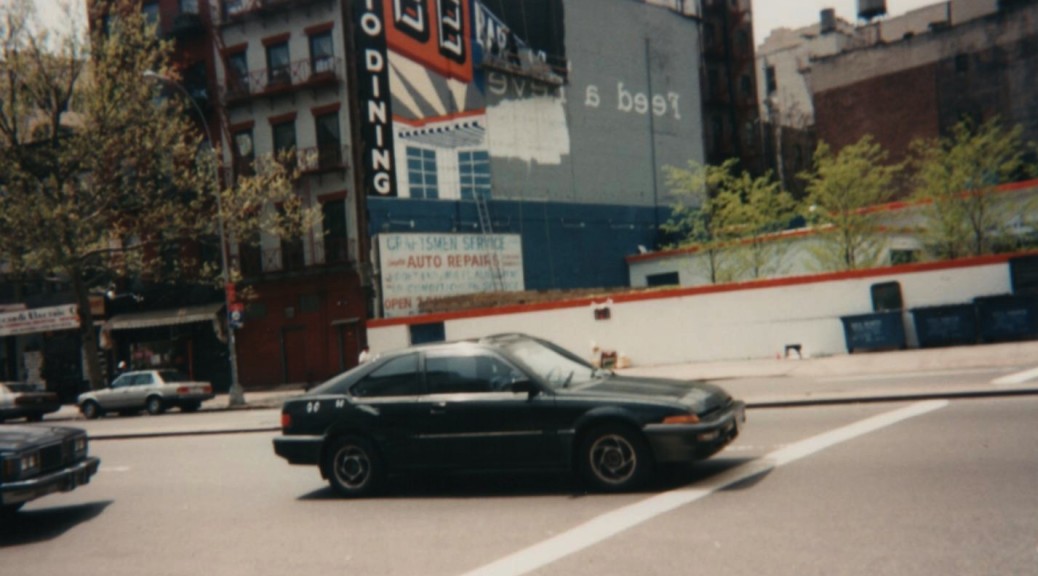
Lower East Side (Mostly), 1996

I’ve written in this space about how when I was in college I used to wander through different neighborhoods in New York City, absorbing all the sights I could. Sadly, I have very little documentary evidence of my trips, unless you count my memory. However, I recently rediscovered a whole pile of old photos I took back then, and included in this pile are some pics from a walk I took through the Lower East Side and the East Village in May 1996. In my head, 1996 seems like yesterday. In reality it’s almost 18 years ago. These pictures make that time seem even longer.

In terms of pure aesthetics, these pictures are not very good. They were taken with a crummy point-and-shoot that had no zoom. This made it very difficult to get the shots I really wanted, because that would have required standing in the middle of traffic. So I’d either have to take very close shots or stand across the street and get wide-angle shots of entire blocks while cars raced in front of me. I usually chose the latter.

Picture quality is further compromised by the fact that all shots were developed at a Genovese on 8th Street. Genovese (one of many NY stores no longer with us) was a drug store that had a photo developing department that employed very few Ansel Adams.

Despite these considerable deficiencies, I want to share these pictures because most of the sights they captured no longer exist. I look at these pictures now and I can remember what the Lower East Side felt like in the mid-90s, when it hadn’t quite become hip, and certainly hadn’t become insanely expensive. If you strolled down Rivington Street on a Sunday afternoon, it wasn’t full of people stumbling their way to brunch. It had an unsettling ancient quiet that was impossible in most of Manhattan. The only sounds you heard were old signs swaying in the breeze and neglected buildings slowly crumbling.

I try not to be one of those insufferable types who longs for a city where “realness” was exemplified by nonstop murder and romantic heroin addictions. However, I look at these pics now, particularly the ones taken on Rivington Street, deep in the heart of what is now the most insanely expensive part of the Lower East Side, and I wonder what happened to the folks who got pushed out by the unstoppable wave of gentrification and development.

One of these pics shows a huge lot on Suffolk Street. You used to see many lots in the area like this, stretches of nothing that were reclaimed by local residents to be ersatz community gardens, junk yards, and flea markets. You can’t quite make it out in the photo, but there was a shack adorned with Puerto Rican flag insignia, whose occupant played a faint salsa soundtrack at all hours. The site is now occupied by a row of very ugly and very expensive condos.

When I took these pictures, the gentrification of the Lower East Side and East Village had already begun in earnest. It was confined to very specific blocks, but a sharp eye could see that it would soon creep everywhere.

Sometimes, you didn’t even need to look very hard. It was right there in front of you. In one photo, a repair shop on West 4th and the Bowery is being converted into the Bowery Bar. The mural on the wall of the building next door is being painted over to mark the occasion, an artsy non sequitur replaced by an enormous advertisement. You can literally see both the working class and bohemia replaced by luxury.

I realize that if you didn’t live in New York back then or don’t live here now, none of this means anything to you. In an effort to display just how much has changed, I’ve paired the old photos with new ones I took recently at the same spots. I did my best to recreate the perspective of the original pics, though in many cases changes in the landscape made precision impossible. And of course, there are the differences in lighting that result from May sky vs. November sky, and the differences in overall look between cheap point-and-shoot and fancy digital camera.

Some sites changed little, synagogues and churches mostly. At St. Patrick’s on Mulberry (the original St. Patrick’s), even the road work sawhorses look the same. Most of these spots have changed, though, enormously. It almost doesn’t matter if that is a good or bad thing, because the change has happened and cannot be unchanged regardless.

While taking the new pictures, I stumbled on a bunch of storefronts that had the look of turn-of-the-20th-century, florid serifed lettering and striped awnings. I thought it was an affectation adopted by boutiques, but then remembered that a TV series was being filmed down here, one set in the early 1900s.

The bustling squalor of that time seems quaint to us now, though life was tough and cheap for the people who lived in the Lower East Side back then. Few shed tears when the residents of the 90s were slowly pushed out for luxury condos and bars. Perhaps one day we’ll see them as picturesque enough to tell their stories. Continue reading Lower East Side (Mostly), 1996 →

Jean Shepherd on New York Baseball Fans, 1963

On the way to work this morning, I listened to a Jean Shepherd radio show from April 1963 in which he discussed the attitude of New York baseball fans in general and Yankees fans in particular. The reason I listen to 50-year-old radio shows is because of how amazingly prescient Shep was, especially when discussing philosophy or commenting on media and show biz. He was no less insightful on the “lesser” topic of sports and fandom.

In this clip, you’ll hear Shep (a Chicago native and lifelong White Sox fan) talk about how nutty the WIN NOW! attitude of New York fans looks to outsiders. He relates the grumbles of a Yankee fan friend who couldn’t stand the thought of his team not winning a pennant in 1959. He also shares memories of a trip to Yankee Stadium with his old pal and fellow Chicagoan Shel Silverstein, when the two of them witnessed Mickey Mantle get booed for the audacity of not hitting a home run that afternoon. Shep provides a passable Shel Silverstein impression to boot.

Shep tops things off with some thoughts on the then-fledgling Mets, the real reason the Dodgers’ and Giants’ move to California was lamented by the press (their gravy train stopped running), and how the New York WIN NOW idea extends to all sports.

I find this fascinating because it is a contemporary account of what fan attitudes and fan experiences were like during the late 1950s and early 1960s. In our cemented memories, this era is rendered in Ken Burns-ian sepiatone nostalgia. But when Shep was speaking, the era was still The Present, and thus could be discussed in an unvarnished way.

When studying most aspects of history we accept that, in order to really understand a time, you have to get as close to contemporary accounts as humanly possible. When it comes to sports, however, we often let ourselves be swayed by myth-making. That makes this Shep clip even more rare, and valuable. I hope you enjoy it.

[audio:http://scratchbomb.com/wp-content/uploads/2013/11/1963-04-Baseball-Fans-excerpt.mp3]

A potentially explosive collection of verbal irritants