All posts by Matthew Callan

Buy My Novel At Your Local Book Shoppe (Sort Of)

Last week, I took Hang A Crooked Number down from Amazon for a variety of reasons delineated here. Since then, I’ve made it available for purchase directly from my blog in epub and PDF form.

Following that announcement, I’ve gotten a number of requests from the device-disinclined population to read the book in non-electronic form. I wish I could fulfill these requests, but while book printing is easier and cheaper than it’s ever been, it remains neither cheap nor easy. The price to make physical copies of my book wouldn’t be insane in the grand scheme of things, but they would probably run into 4 figures, and if my ebook sales are any indication, I’d never make back those costs.

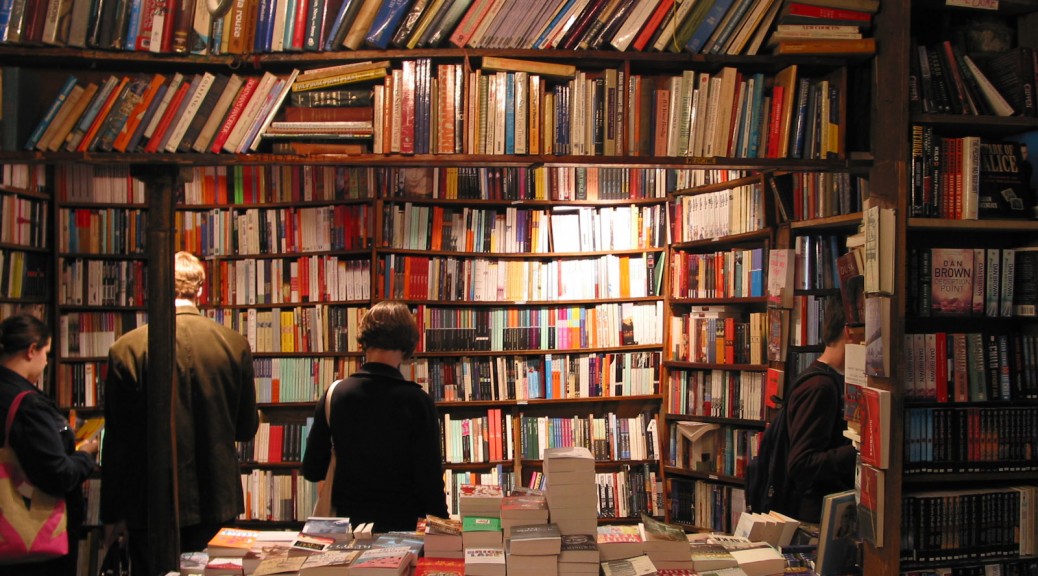
I honestly wish I could make my novel a “real” book because I still have a romantic attachment to seeing a book I wrote on a shelf in a quaint book shoppe where WQXR plays gently in the background and some weird dude monopolizes the store’s only table to plow through a pile of Schopenhauer. So I went ahead and did the next best thing.

I’ve put my book up for sale via Kobo, an ereader device/app that has partnerships with a number of indie bookstores across the country. It’s a small way to read ebooks for titles like mine that are only available in ebook form, yet still support the existence of local bookstores (as opposed Amazon, which wants to crush them). If you go to this page, you can a zip code and find a nearby store that sells ebooks via Kobo.

If you’re in the NYC area, I know Word, Housing Works, and Greenlight all work with Kobo. So if you wanna buy Hang A Crooked Number while still supporting the printed word dispenser near you, consider this path. The bookstore gets a cut, I get a cut, local shops get to stay in business, and you get to buy something quickly and easily without stepping on someone’s throat. What a novel concept.
F train, 7:20 am

I used to see him every morning waiting for the F train. I’d climb the stairs from the L to the F platform and there he’d be, as if he wouldn’t appear until I arrived. He wore black frame glasses and had a mop of carefully messed-up sandy brown hair with sideburns, and was always dressed with assured but subdued style. He favored striped shirts and dark pants and I got the idea in my head that he used to be in a power pop band, or still was.

He’d never be alone. A little girl clutched his hand, adorably and impossibly blond. She appeared to be around my own daughter’s age at the time, three or four years old. The dad also had a Snugli strapped to his chest cocooning an infant girl, who barely stirred except to occasionally nuzzle her tiny head into her father’s chest.

They went the same way as me, boarding the F at the very front of the train. The little girl would perch on her seat and look out the window at the nothing of the subway tunnel yet still see enough to ask an endless series of questions: What’s that? What’s that? What’s that? The dad would answer to the best of his ability while reminding her they would be on the train for just one stop and then they had to get off, okay?

They would position themselves to disembark at the very first door, a few feet in front of me as I steeled myself to do the same. I would wait to move until the dad got his cargo off the train, the little girl toddling onto the platform with harsh but unsure little girl steps,

Sometimes I would dash past them, not wanting to get caught behind them on the stairs leading back to the street because I was running late or had work waiting on my desk. But sometimes I wouldn’t care and I’d walk behind them, watching the little girl scale the steps, lifting one foot as high as she could, then the other.

Seeing him with his little girls reminded me of my own little girl I’d just dropped off at day care. He reminded me that my work day was just one long countdown until I could see her again. I envied him, but I wasn’t jealous. I was happy for him, happy that he could do this, happy that somebody could, happy that he was happy, and he looked happier than anyone should that early in the morning.

I saw this dad and his girls most mornings for a year or two, maybe more. Then one day I didn’t seem them, and it made me sad. I didn’t see them the next day, or the day after that, and I was still sad. But then I didn’t see them for a while, and soon I forgot that I hadn’t seen them in a while, and they were lost in some hazy place in my mind.

On Monday morning, I took my usual route to work at my usual time, my ears plugged up with headphones and my mind swirling with a legion of slights I hadn’t even suffered yet, and as I ascended the stairs from L train to the F, there he was. He had only one little girl with him now, and not the same one as before. The blonde girl had been replaced by a tiny redhead, the former Snugli occupant. The Snugli was gone, and so was the blonde chatterbox who used to clutch his hand. Older and off to school, just like my own girl.

They weren’t waiting around for the F train like they used to. The dad and the tiny redhead climbed the stairs to street level. The girl hoisted one leg with defiance, then the other, just like her sister used to, while the dad beamed, and so did everyone on the platform who saw them climb.

I stared at them as they went, until the F train arrived to take me away. I used to see that every day, I remembered. I was glad to know that I missed them.

Consider Doing More Than Nothing

I’ve pulled my book from Amazon.

Doing this will cause me no hardship whatsoever, either now or in the foreseeable future. My novel Hang A Crooked Number has sold as many copies as it will ever sell, having gone over like the proverbial lead balloon. I have no writing career that a break from Amazon could damage. I’m no threat to acquire such a career any time soon; I once thought writing would be my vocation, but I’ve accepted that it will be nothing more than a hobby.

In other words, this move involves almost no sacrifice on my part. The stakes could not be lower for me. I’m pulling my book anyway.

I was ambivalent at best about putting my book on Amazon to begin with. Did I really want to associate myself with a company that had destroyed Main Street as thoroughly and ruthlessly as Wal-Mart, if not more so?* One that’s laid to waste thousands of stores across the country, and apparently has its eye on taking out shipping companies, too?

I weighed Amazon’s force of evil against my desire to see lots of people to read my book and eventually decided to side with the latter. Since my novel was only going to be available in ebook format, I wanted it to be available in the format most people use to read ebooks. I saw a caravan full of demons barreling down the road and stuck my thumb out to hitch a ride, figuring As long as they’re going my way…

I believe the word for this kind of reasoning is “chicken-shit.”

We all do this in some form or another, making explicit or implicit compromises with distasteful organizations because they might make our lives easier for a moment. It’s not that we don’t care. We just don’t want to care all the time. Life is hard. We treasure those brief moments where one minute hassle has been removed from our days.

Many people who use Amazon are fully aware of, and have issues with, the company’s lowballing and bullying tendencies, its rapacious hunger to devour all competition, and its pitiful record of charitable donations compared to other giant corporations. We hit pause on these concerns because we really want to be able to pick up a deck chair and a pair of shoes and a DVD set without driving to three different stores.

Just a few weeks ago, I ordered a few items from Amazon, reasoning that it was hard to find them at local stores because there weren’t many local stores where I could find those items. It wasn’t until my package arrived that it occurred to me Amazon was the reason those local stores had disappeared.

By all accounts, this was Jeff Bezos’s intention from Day One: Become so large and eliminate so much competition that concerns about how you play the game become immaterial, because you are the only game in town. If you could bring to life a Gilded Age robber baron’s wet dream, this would be it.

Amazon’s current tiff with Hachette is just the latest example of what happens when you let some evil slide for a while for the sake of convenience. In a fit of caprice befitting an inbred Renaissance monarch, Amazon has stopped selling certain books because one publisher dared say no to them. The company actually has the balls to tell customers to seek these books out elsewhere, knowing full well that there are few elsewheres to seek out (especially when it comes to books), and that they’ve trained their customer base to look upon any offline shopping experience as an insufferable ordeal.

I don’t know if I’ll ever write another book, or if I’ll write much of anything in the future. I do know that I would like someone to keep writing books, and I would like those books to be available in as many channels as possible. I do know that I don’t want publishing to devolve into the same state as other culture industries, to become a Brazil ruled by a small coterie of the super-elite perched atop a sea of dog-eat-dog favelas stretching out in every direction.

And so I’d rather not be a part of something that is actively working toward that end, however infinitesimally small my part might be. On the off chance anyone still wants to read my novel, it can now be purchased here. I’ll trade the loss of hypothetical reach offered by Amazon for the knowledge that whatever future pennies are spent on my book won’t line Amazon’s pockets.

Pulling my book from Amazon is barely doing anything, but it’s not doing nothing. Consider doing more than nothing.